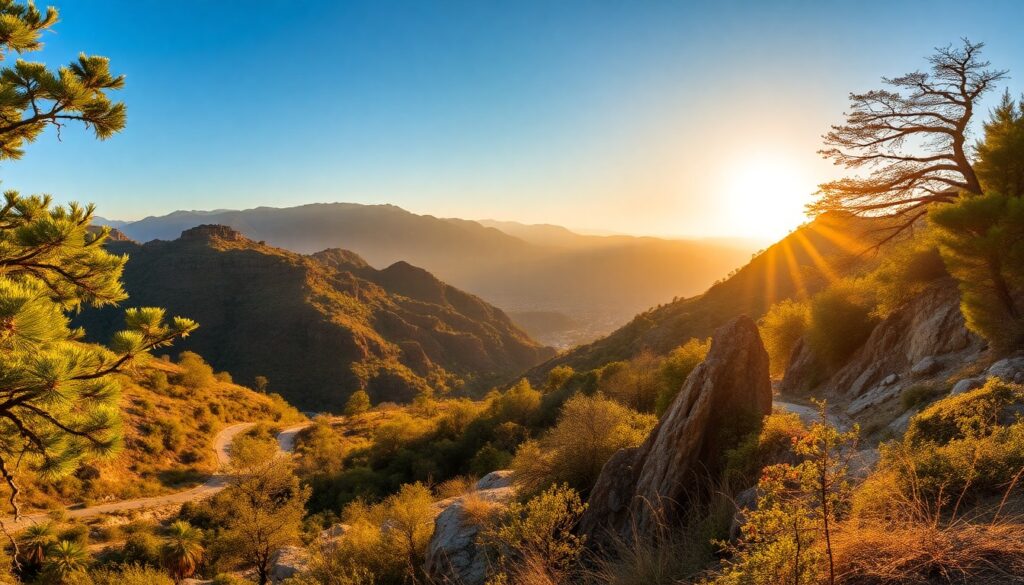
As you ascend the steep, dusty path, the urban sprawl of Los Angeles gradually unfolds beneath you, a breathtaking panorama stretching from the iconic Hollywood Sign to the distant Pacific Ocean. The crisp scent of sun-baked chaparral fills the air, mingling with the subtle hum of the city below, a unique blend of wilderness and metropolitan energy that defines the Runyon Canyon West Loop. This challenging yet immensely rewarding trail offers an unparalleled perspective on Hollywood, inviting you to earn every spectacular vista with a vigorous climb through the rugged foothills of the Santa Monica Mountains.
Trail Specifications
Trail Name: Runyon Canyon West Loop
Location: Hollywood, CA
Distance: Approximately 3.0 miles (Loop)
Elevation Gain: Approximately 850 feet
Difficulty: Moderate to Strenuous
GPS Coordinates (Fuller Ave Trailhead): 34.1080° N, 118.3530° W
Best Season: Fall, Winter, Spring
Dog-Friendly: Yes, off-leash in designated areas
Route Overview & Natural Highlights
The Runyon Canyon West Loop plunges you into a quintessential Southern California chaparral ecosystem, characterized by its resilience and fragrant flora. As you climb, you’ll traverse unpaved fire roads and narrower, rockier singletrack paths that demand sturdy footing. The terrain is a mix of exposed, sun-drenched slopes and occasional shaded pockets provided by hardy native species. Geologically, you are hiking on the foothills of the Santa Monica Mountains, a range primarily composed of sedimentary rock, which contributes to the dusty, often gravelly nature of the trails.
Keep an eye out for the diverse plant life that thrives in this arid environment. You’ll encounter dense stands of California sagebrush (Artemisia californica), identifiable by its silvery-green leaves and distinctive aroma, especially after a rare rain. Look for the vibrant red berries of Toyon (Heteromeles arbutifolia), also known as California Holly, and the gnarled branches of Coast Live Oak (Quercus agrifolia) providing welcome shade. Wildlife sightings are common, with Western Fence Lizards darting across your path and various bird species, including the melodious California Towhee and soaring Red-tailed Hawks, circling overhead. Occasionally, you might spot a coyote, especially during quieter hours, a reminder that this urban oasis is also a wild corridor.
The true reward of the West Loop lies in its evolving panoramas. From various points along the ascent, you’ll be treated to increasingly expansive views of the Los Angeles basin, stretching from Downtown LA’s skyscrapers to the distant Pacific Ocean on clear days. The iconic Hollywood Sign stands sentinel to the east, while the majestic Griffith Observatory gleams on its perch. These sweeping vistas provide a constant motivation, transforming your strenuous efforts into moments of profound appreciation for this unique intersection of nature and cityscape.
Turn-by-Turn Trail Breakdown
Trailhead Start (Fuller Avenue Entrance): Your journey begins at the Fuller Avenue entrance, a popular starting point. From the moment you step onto the trail, the path begins a steady, immediate ascent. Initially, you might encounter a paved section, but it quickly gives way to a wide, unpaved fire road. The views open up almost instantly, offering glimpses of the Hollywood Hills residential areas and the emerging cityscape below. You’ll soon bear right, choosing the steeper, more challenging West Ridge Trail (also known as the “Runyon Canyon Road” on some maps, but distinct from the main paved road that loops through the canyon). This segment immediately tests your stamina with its consistent incline.
Mid-Trail Features (West Ridge Ascent): As you continue along the West Ridge Trail, the climb becomes steeper and rockier in sections. This is where the “strenuous” aspect of the hike truly comes into play. You’ll gain elevation rapidly, and with each switchback, the perspective changes, revealing new angles of the sprawling metropolis. Look for a large, flat rock formation often used as a resting spot, offering a perfect vantage point to catch your breath and absorb the incredible views. You’ll pass by various smaller trails branching off, but stick to the main ascending path that hugs the ridge. The vegetation here is particularly dense chaparral, providing a sense of immersion in the natural landscape despite the city’s proximity.
Summit/Destination & Return: The summit of the West Ridge Trail rewards your efforts with a breathtaking 360-degree panorama. From this elevated position, you can clearly see the Hollywood Sign, the Griffith Observatory, the distant skyscrapers of Downtown LA, and on exceptionally clear days, the shimmering Pacific Ocean and Catalina Island. Take your time here to soak it all in. To complete the loop, you will descend via the main paved Runyon Canyon Road (the “East Trail” or “Fire Road”), which offers a much gentler, wider path down. This descent provides a different perspective, often less crowded, and allows you to appreciate the canyon’s interior. You’ll eventually loop back towards the Fuller Avenue entrance, completing your invigorating journey.
Seasonal Guide & Best Times
- Winter (December – February): Expect cool, crisp temperatures and often crystal-clear skies after a rain. The hills turn a vibrant green, a refreshing contrast to the drier months. This is an ideal time for hiking, with fewer crowds than in warmer seasons.
- Spring (March – May): Mild temperatures, occasional wildflowers, and still-green hills make spring another excellent time to visit. Mornings are particularly pleasant before the midday sun warms the canyon. Weekends can be busy, so consider a weekday hike.
- Summer (June – August): Summers are hot and dry, with temperatures often soaring. If you must hike during this season, go very early in the morning (shortly after sunrise) or in the late evening (before sunset) to avoid heat exhaustion. Bring extra water and be prepared for dusty conditions. Haze can obscure distant views.
- Fall (September – November): As temperatures begin to cool from the summer highs, fall offers pleasant hiking conditions. The air often clears after the summer haze, providing excellent visibility for those panoramic views. Crowds tend to lessen compared to peak spring or summer mornings.
Essential Gear & Safety
- Water: This is paramount. The West Loop is exposed and strenuous; bring more water than you think you’ll need, especially on warmer days.
- Sun Protection: A wide-brimmed hat, sunglasses, and high-SPF sunscreen are non-negotiable. There’s minimal shade on the West Loop.
- Sturdy Hiking Shoes: The unpaved, rocky, and steep sections demand good tractionThe Bookworm CampaignSubtle Comforts • Intentional Living
Curated Literature & Los Angeles Downtown Calendar
Philosophy & Focus Curated EditionThe Architecture of Focus: Deep Work & Modern Mastery
By Founders Library Press
A structured framework for strategic clarity, productivity, and authentic execution.
Los Angeles Calendar Downtown • Arts • CultureUpcoming Downtown Happenings
Live acoustic sessions, gallery receptions, literary salons, and independent trade shows across Los Angeles.
