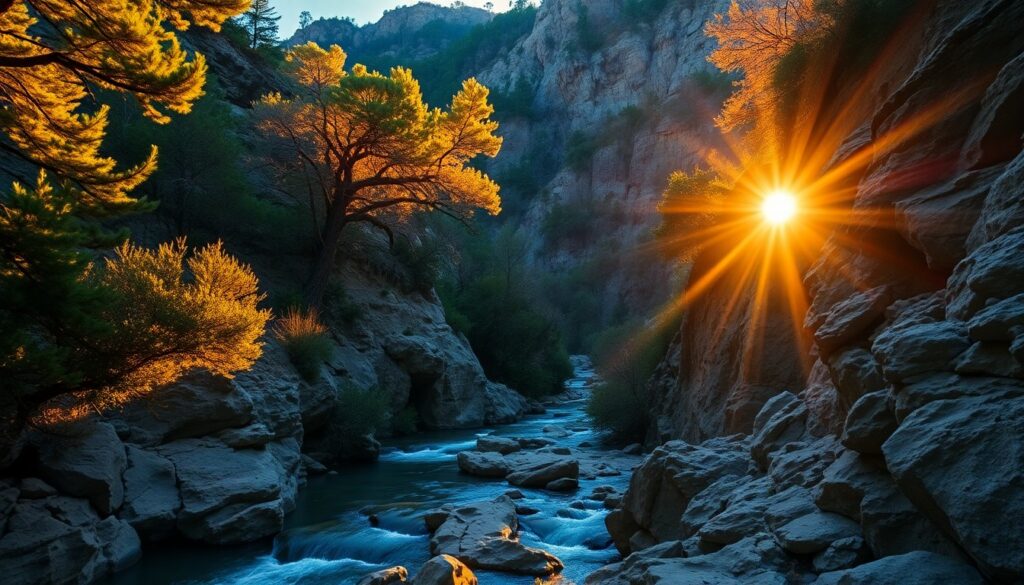
The gentle murmur of Solstice Creek, a rare year-round water source in the Santa Monica Mountains, immediately welcomes you as you step onto the Solstice Canyon Creek Trail. Sunlight filters through the dense canopy of California sycamores and coast live oaks, casting a dappled mosaic on the path ahead. This tranquil oasis, nestled within the rugged Malibu landscape, offers a refreshing escape where history and nature intertwine, inviting you to explore its shaded depths.
Trail Specifications
Trail Name: Solstice Canyon Creek Trail
Location: Malibu, California (Santa Monica Mountains National Recreation Area)
Distance: Approximately 3 miles (loop via Rising Sun Trail)
Elevation Gain: Approximately 300-400 feet
Difficulty: Easy to Moderate
GPS Coordinates (Trailhead): 34.0384° N, 118.7302° W
Best Season: Year-round; ideal in spring, fall, and winter.
Dog-Friendly: Yes, on leash.
Route Overview & Natural Highlights
The Solstice Canyon Creek Trail carves its way through a verdant canyon, a stark contrast to the drier chaparral hillsides that define much of Malibu. Your journey begins on a wide, mostly flat path that follows Solstice Creek, a perennial stream that sustains a rich riparian ecosystem. Here, you’ll walk beneath towering California sycamores (Platanus racemosa) with their striking white bark, alongside coast live oaks (Quercus agrifolia) providing deep shade. Look for the delicate white flowers of California sagebrush (Artemisia californica) and the vibrant green of toyon (Heteromeles arbutifolia) on the canyon slopes above.
As you venture deeper, the trail transitions from paved to a well-maintained dirt path, occasionally crossing the creek on sturdy bridges. The geological story of the Santa Monica Mountains is subtly revealed in the exposed rock faces – ancient sedimentary layers interspersed with volcanic intrusions, shaped over millennia by tectonic forces and the erosive power of water. Keep an eye out for local wildlife; you might spot mule deer browsing in the undergrowth, a red-tailed hawk soaring overhead, or hear the distinctive call of a California scrub jay. The canyon’s microclimate also fosters a variety of ferns and mosses, particularly around the rockier sections and the seasonal waterfall.
Turn-by-Turn Trail Breakdown
Trailhead Start: Canyon Bottom Exploration
From the main parking lot, you’ll begin on a wide, mostly paved path that parallels Solstice Creek. The initial stretch is flat and incredibly scenic, immediately immersing you in the lush riparian corridor. Within the first half-mile, you’ll encounter the historic Keller House, the oldest stone building in Malibu, dating back to 1865. Take a moment to imagine life in this remote canyon a century and a half ago. The path here is generally easy, making it accessible for most hikers.
Mid-Trail Features: Ascending to the Ruins
Beyond the Keller House, the trail continues deeper into the canyon. You’ll pass several smaller footbridges crossing the creek, offering glimpses of the clear water and smooth river stones. As you approach the two-mile mark, the main trail begins a gentle ascent, leading you towards the captivating ruins of the Roberts Ranch House. This modern architectural marvel, designed by Paul Williams, was destroyed in the 1982 fire, but its stone and concrete remnants stand as a striking reminder of the canyon’s past residents.
Summit/Destination & Return: Waterfall and Loop Option
At the Roberts Ranch House ruins, you can explore the various foundations and remaining structures. Just behind the main house, a short path leads to a picturesque, though often seasonal, waterfall cascading over a mossy rock face. This is a perfect spot for reflection and photography. For your return, you have two options: retrace your steps along the creek for an easy descent, or for a more challenging and scenic loop, take the Rising Sun Trail. The Rising Sun Trail climbs out of the canyon, offering panoramic views of the Pacific Ocean and the surrounding hills before descending back to the parking lot. This loop adds a moderate incline but rewards you with expansive vistas.
Seasonal Guide & Best Times
- Spring (March – May): The canyon truly comes alive. Wildflowers carpet the hillsides and trail edges, the creek flows strong, and the air is crisp. Ideal for photography and enjoying mild temperatures.
- Summer (June – August): While inland areas can be scorching, Solstice Canyon offers a shaded, cooler retreat. Early mornings are best to avoid the warmest parts of the day. The creek provides a refreshing microclimate.
- Fall (September – November): Pleasant temperatures return, and the sycamores and oaks display subtle autumn colors. This is a wonderful time for a peaceful hike, often with fewer crowds than spring.
- Winter (December – February): Following rains, the creek is at its fullest, and the hillsides turn a vibrant green. Cooler temperatures make for invigorating hikes. The waterfall is most likely to be active during this season.
Essential Gear & Safety
- Water: Carry ample water, especially on warmer days. There are no potable water sources on the trail.
- Sturdy Footwear: While parts are paved, sections of the trail are rocky and uneven. Hiking shoes or sturdy athletic shoes are recommended.
- Sun Protection: Though parts of the canyon are shaded, the Rising Sun Trail and sections near the trailhead can be exposed. Bring a hat, sunglasses, and sunscreen.
- Layered Clothing: Malibu weather can change quickly. Layers allow you to adjust to varying temperatures and sun exposure.
- First-Aid Kit & Map: Always carry a basic first-aid kit. While the trail is well-marked, a map (physical or digital via apps like AllTrails) can be helpful.
Getting There & Parking
Solstice Canyon is located at 3998 Solstice Canyon Rd, Malibu, CA 90265. From Pacific Coast Highway (PCH) in Malibu, turn inland onto Corral Canyon Road, then make an immediate right onto Solstice Canyon Road. Follow this road to its end, where you’ll find a well-maintained parking lot managed by the National Park Service. Parking is free, but spaces can fill up quickly on weekends, particularly during peak seasons. Arrive early to secure a spot. The park is generally open from sunrise to sunset, but check the National Park Service website for current operating hours and any temporary closures before your visit.
Curated Literature & Los Angeles Downtown Calendar
The Architecture of Focus: Deep Work & Modern Mastery
By Founders Library Press
A structured framework for strategic clarity, productivity, and authentic execution.
Upcoming Downtown Happenings
Live acoustic sessions, gallery receptions, literary salons, and independent trade shows across Los Angeles.
